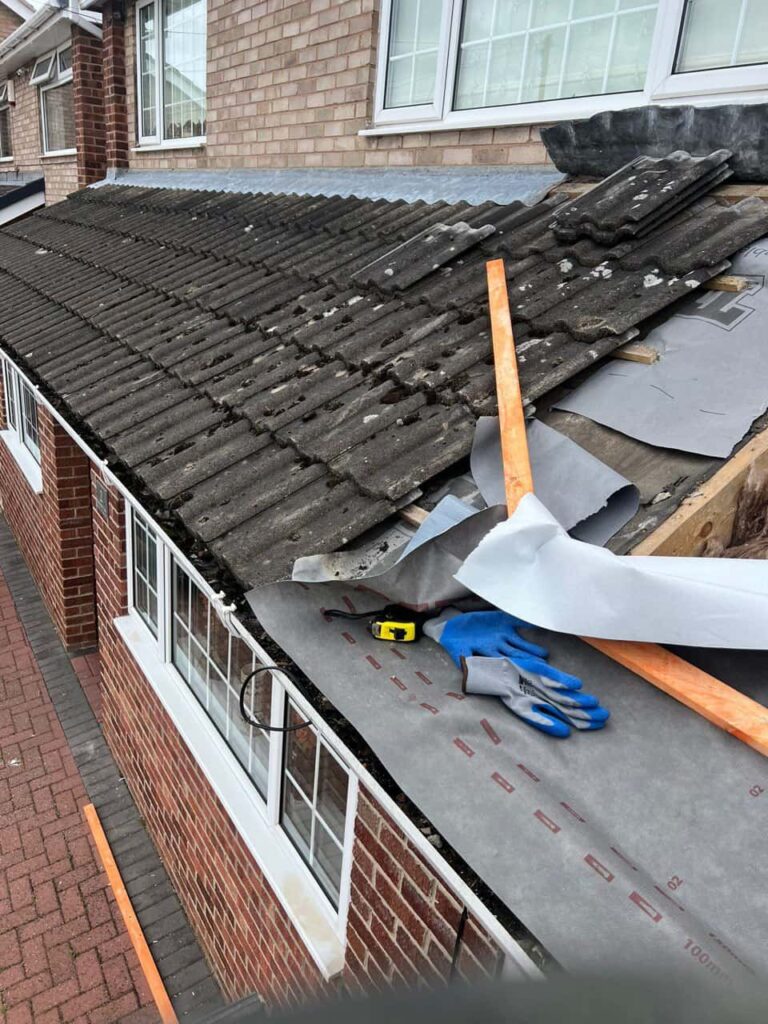
A roof leak may appear straightforward, but water can travel beneath tiles, along timbers and through insulation before becoming visible indoors. The damp patch on a ceiling may therefore be some distance from the original defect.
For homeowners in Brierley Hill, West Midlands, understanding the roles of the roof covering, flashing and underlay can help explain why accurate leak detection is essential. Each component protects the property differently, and a lasting repair depends on identifying which one has failed.
Understanding the Source of a Roofing Problem
Signs of a Defect in the Roof Covering
The roof covering is the outer layer formed by tiles, slates or another weather-resistant material. Its purpose is to shed rainwater and protect the layers beneath.
Common signs of covering damage include:
- cracked, broken or missing tiles
- slates that have slipped out of alignment
- visible gaps across a roof slope
- loose fragments around the property
- water ingress after wind-driven rain
- daylight visible through the roof covering
A single damaged tile may cause a localised problem. If tiles are moving or breaking across several areas, however, weakened fixings, deteriorated battens or general ageing may also be involved.
Signs That Flashing May Be Responsible
Flashing protects the junctions where the main roof covering meets another surface or feature. It is commonly found around chimneys, roof windows, adjoining walls and valleys.
Possible indications of defective flashing include dampness appearing close to a chimney breast or wall junction. Leaks may also occur only when rain is driven from a particular direction.
Externally, flashing may look lifted, split, distorted or separated from the surface it is meant to protect. Mortar around the edge can also deteriorate, allowing water to enter behind the metal. Because even a small opening can admit moisture, flashing problems are not always obvious from ground level.
Signs of Damaged or Deteriorated Underlay
Underlay sits beneath the tiles or slates and provides a secondary layer of protection. It helps direct any moisture that passes the covering towards the roof edge.
Underlay can tear, sag or deteriorate through age, prolonged dampness or movement. Warning signs may include:
- moisture entering despite apparently intact tiles
- staining across rafters or battens
- dampness appearing in more than one internal location
- torn or hanging material visible inside the roof space
- recurring leaks after individual tiles have been repaired
Damaged underlay can allow water to travel before it enters the property, making the source of the leak difficult to pinpoint. Access may also be restricted by insulation or internal finishes.
Why Similar Symptoms Can Have Different Causes
A ceiling stain beneath a chimney might suggest faulty flashing, but the water could have entered higher up through a damaged tile. It may then have followed a rafter before reaching the chimney area.
Likewise, a missing tile may be visible, but deteriorated underlay beneath it could explain why water has spread beyond the immediate section. More than one roofing component can fail at the same time, particularly where moisture has been entering for an extended period.
This is why repairing only the most obvious defect does not always stop a leak.
How Weather Patterns Provide Useful Clues
The conditions in which a leak appears can help narrow down its likely cause:
- leaks during wind-driven rain may indicate lifted tiles or vulnerable flashing
- leaks during prolonged rainfall can suggest slow moisture penetration
- water near a chimney may point towards flashing or adjoining materials
- dampness after every rainfall may indicate an established opening
- intermittent leaks can result from water taking different routes through the roof
These patterns are useful evidence, but they do not replace a physical inspection.
What a Professional Roof Inspection Should Examine
A thorough assessment considers the roofing system as a whole. This includes the visible covering, fixing points, ridges, valleys, flashing, underlay, battens and accessible roof timbers.
The location of internal dampness should be compared with external roof features and the direction of water travel. Where appropriate, surrounding materials may need to be lifted carefully so that hidden components can be examined.
This approach distinguishes a straightforward surface defect from a deeper problem requiring attention beneath the covering.
Why Correct Diagnosis Produces a Better Repair
Replacing a tile will not resolve split flashing, and sealing visible flashing will not repair deteriorated underlay. Treating the wrong component may temporarily alter the leak without stopping it.
Accurate diagnosis allows the repair to target the entry point and any affected surrounding materials. It also reduces the likelihood of moisture continuing unnoticed beneath an apparently repaired surface.
Conclusion
Damage to the roof covering is often indicated by cracked, missing or displaced materials. Flashing problems tend to affect roof junctions, while underlay defects may allow water to spread beneath tiles before becoming visible indoors. However, these symptoms can overlap, and several components may be involved.
If your property in Brierley Hill, West Midlands has developed a leak or unexplained dampness, contact Brierley Hill Roofing Repairs to arrange a professional assessment. Our team can identify the source of the problem and recommend a suitable, carefully targeted repair.
Call us on: 01384 437 690
Click here to find out more about Brierley Hill Roofing Repairs
Click here to complete our contact form and see how we can help with your roofing needs.